

What happens when traditional knowledge meets modern science? [coming soon]
Look at remedies used across generations and cultures alongside what contemporary research is discovering about them.
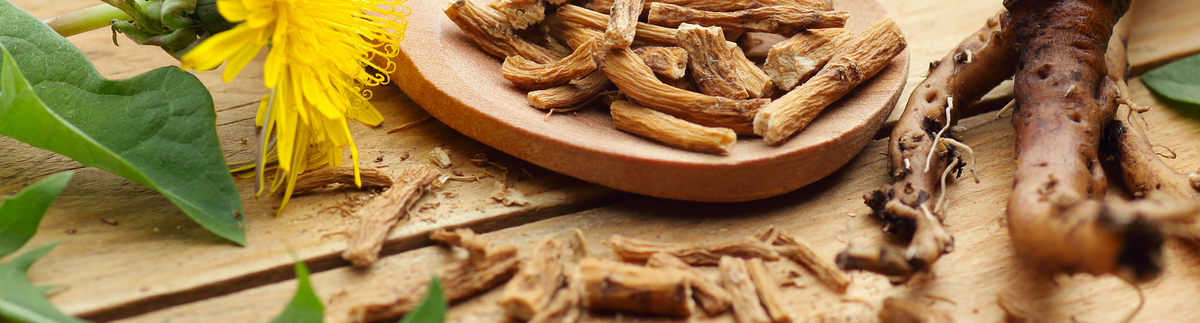
It grows in lawns, cracks in sidewalks, fields, gardens, and just about anywhere else we haven't managed to keep it out.
We call it a weed.
We spray it. Pull it. Dig it up. Try to keep it from coming back.
And yet, for generations, people have eaten dandelions and used different parts of the plant in traditional remedies. The leaves are food. The flowers are edible. The roots have been used in teas and preparations. And today, researchers continue to study compounds found throughout the plant and their potential biological effects.
All of which raises an interesting question:
What else have we dismissed because we stopped knowing what to look for?
Long before medicines came in bottles, people learned about the natural world by living closely with it.
They observed.
Which plants could be eaten. Which caused harm. What soothed a wound. What settled a stomach. What happened when a particular root was steeped, a leaf crushed, or a plant prepared in a certain way.
Some of that knowledge became the foundation for medicines we still use today. Some remained part of traditional healing systems and family practices. Some has been supported by later research. Some hasn't. And some is still being investigated.
That doesn't make every old remedy effective.
But neither does old mean irrelevant.
Sometimes traditional knowledge gives us a place to begin asking better questions.

The dandelion is so ordinary that it's easy not to see it at all.
But look closer.
Its leaves, flowers, and roots have all been used as food or in traditional preparations. It contains vitamins, minerals, fiber, and a variety of plant compounds. Researchers have investigated dandelion extracts and individual compounds for a range of possible biological activities.
That doesn't mean every traditional claim about dandelion has been established as medicine.
It means this little plant we've spent generations trying to remove from our lawns is more interesting than the word weed suggests.
And dandelion is hardly alone.
Willow helped lead us toward aspirin. Foxglove gave medicine compounds used in heart treatment. The rosy periwinkle contributed drugs that transformed treatment for certain childhood cancers.
Nature has been doing chemistry much longer than we have.
We learned to notice.
Not all knowledge begins in a laboratory.
Across generations and cultures, people developed detailed relationships with the plants, animals, seasons, soils, and ecosystems around them. Knowledge was learned through observation and experience and passed from one person to another.
Modern science gives us extraordinary tools for testing those observations—isolating compounds, measuring effects, identifying mechanisms, determining dosage, and discovering when something doesn't work or may actually be harmful.
Those approaches don't have to be enemies.
One can ask the question.
The other can help us investigate it.
And sometimes the question itself came from someone who had been paying attention for a very long time.

Humans aren't the only animals that interact with nature in ways that appear connected to health.
Scientists have observed animals consuming or applying plants and other substances in circumstances that suggest forms of self-medication. Other species navigate environments using senses we don't possess, respond to chemical information we never consciously perceive, and interact with ecosystems in ways we're still working to understand.
Plants themselves are far from passive.
They respond to light, gravity, touch, injury, chemicals, neighboring plants, insects, fungi, and changes in their environment. Beneath the soil, roots, fungi, microbes, nutrients, and chemical signals participate in relationships largely invisible to us above ground.
A quiet patch of earth can contain an extraordinary amount of activity.
We tend to notice the spectacular—the rare flower, the exotic herb, the new discovery. Meanwhile, the dandelion grows beside the driveway, largely unnoticed.
Maybe there's something worth remembering in that. Not everything valuable is rare. Not everything ancient is outdated. And not everything we call a weed is useless.
Sometimes discovery isn't about finding something that wasn't there before. Sometimes it's about looking again at what has been there all along.

There’s more happening in the natural world than we often notice. Here are a few places to look a little closer.
Look at remedies used across generations and cultures alongside what contemporary research is discovering about them.
Explore the ways animals use plants, insects, minerals, and other substances when sick, injured, or protecting themselves.
Explore the ways animals use plants, insects, minerals, and other substances when sick, injured, or protecting themselves.
Explore how plants sense and respond to their surroundings, communicate chemically, recognize threats, and interact with other living things.
Explore fungi, roots, microbes, soil communities, and the remarkable relationships connecting life beneath the surface.
Explore plant knowledge, folk practices, food traditions, remedies, and ways of living with nature passed from one generation to the next.
