

What connects all of this?
Learn about the many ways we experience energy—from the measurable and physical to the subtle and difficult to explain.
Learn About Energy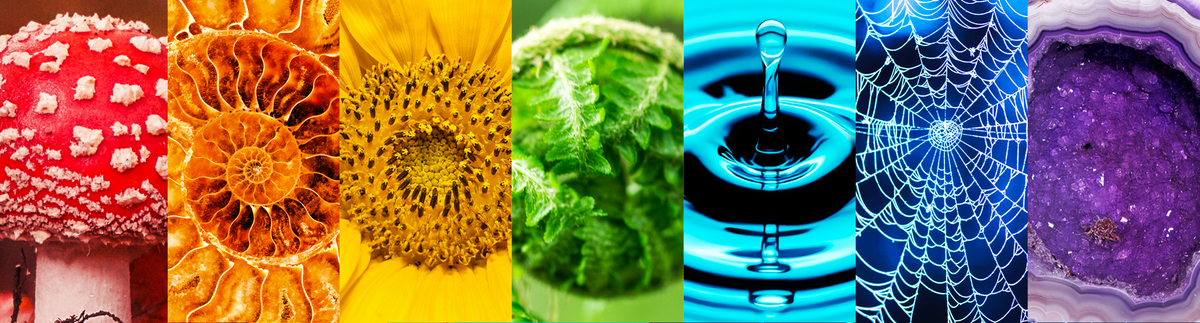
You’ve probably heard someone mention chakras—a blocked heart chakra, an open third eye, or the need to balance your energy. But what exactly are they?
The word chakra comes from Sanskrit and means wheel or disc. Chakras come from Indian spiritual traditions and are understood as centers within the subtle body through which life energy, or prana, moves.
There are different chakra systems and teachings, but the version most familiar in the West focuses on seven primary chakras running from the base of the spine to the crown of the head.
Chakras are often described as open, closed, blocked, or balanced. It can be tempting to treat those words almost like a diagnosis: My throat chakra is blocked. I need to fix it.
There may be a more useful way to approach them.
Think of the chakras as places to pay attention.
If you find yourself struggling to speak honestly, the throat chakra offers a way to explore expression and truth. If you feel unsettled or disconnected, the root invites you to consider safety and grounding. If you're having difficulty receiving or offering compassion, the heart gives you somewhere to begin.
You don't necessarily need to decide that an invisible wheel of energy is literally blocked to find value in what the system asks you to notice.
You’ve probably heard someone mention chakras—a blocked heart chakra, an open third eye, or the need to balance your energy. But what exactly are they?
The word chakra comes from Sanskrit and means wheel or disc. Chakras come from Indian spiritual traditions and are understood as centers within the subtle body through which life energy, or prana, moves.
There are different chakra systems and teachings, but the version most familiar in the West focuses on seven primary chakras running from the base of the spine to the crown of the head.
You don't need to memorize seven Sanskrit names or know whether every chakra is perfectly balanced.
Instead, notice where your attention naturally goes.
Perhaps one of these themes feels particularly relevant right now—safety, creativity, confidence, connection, expression, intuition, or meaning. You might notice a physical sensation, an emotion, a memory, or simply a sense that one area deserves a little more attention.
Stay curious about what comes up without rushing to label or fix it.
The chakra system can be a map.
You still get to explore the territory for yourself.
The chakra system is rich with symbolism. Each chakra is traditionally associated with a location in the body, color, element, and lotus symbol whose petals, shapes, and Sanskrit characters carry meanings of their own. Alongside these traditional associations, we’ve paired each chakra with something found in nature—not as a traditional symbol, but as a way of noticing how similar patterns and qualities appear in the world around us. Even the geometry within the chakra symbols has significance, with circles, squares, and triangles representing elements, complementary forces, and the movement of energy.

Traditionally associated with the color red and the element of earth, the root chakra is located at the base of the spine. It relates to grounding, safety, stability, our physical needs, and our sense of belonging—our foundation and connection to the physical world. Its traditional symbol is a four-petaled lotus, often depicted with a square representing the earth element. IN NATURE : Mushroom A mushroom rises from the earth, but what we see above ground is only part of the story. Beneath it lies an unseen network of mycelium, connecting it to a much larger system—a fitting reflection of the foundations, connections, and support that help us feel rooted.

Traditionally associated with the color orange and the element of water, the sacral chakra is located in the lower abdomen. It relates to creativity, emotion, pleasure, desire, and our ability to move with change rather than remain fixed. Its traditional symbol is a six-petaled lotus, often depicted with a crescent moon representing the water element. IN NATURE : Ammonite The ammonite’s spiral reflects movement, growth, and continual change. Formed through a life lived in water, its shape offers a beautiful reminder that growth rarely happens in a straight line.

Traditionally associated with the color yellow and the element of fire, the solar plexus chakra is located in the upper abdomen. It relates to personal power, confidence, will, vitality, and the developing sense of who we are and what we are capable of. Its traditional symbol is a ten-petaled lotus, often depicted with a downward-pointing triangle representing fire. IN NATURE : Sunflower A sunflower grows toward the light, opening fully as it reaches toward the sun. Its warmth, strength, and vitality offer a natural reflection of the inner fire associated with the solar plexus.

Traditionally associated with the color green and the element of air, the heart chakra is located at the center of the chest. It relates to love, compassion, connection, forgiveness, and our ability to both give and receive with openness. Its traditional symbol is a twelve-petaled lotus, often depicted with two intersecting triangles at its center. IN NATURE : Fern Fiddlehead A fiddlehead begins tightly curled, slowly unfurling as it grows. Its gradual opening offers a natural reflection of the heart—softening, expanding, and opening to connection while still honoring its own pace.

Traditionally associated with the color blue and the element of ether or space, the throat chakra is located at the throat. It relates to communication, truth, self-expression, and our ability to give voice to what we think, feel, and know. Its traditional symbol is a sixteen-petaled lotus, often depicted with a circle representing ether or space. IN NATURE : Water Ripple A single drop of water creates ripples that travel far beyond the place where it first lands. In much the same way, our words and expressions move outward from us, carrying their energy and influence into the world around us.

Traditionally associated with indigo, the third eye chakra is located between the eyebrows. It relates to intuition, insight, perception, imagination, and our ability to look beyond what is immediately apparent. Its traditional symbol is a two-petaled lotus, often shown with an inverted triangle at its center. IN NATURE : Spiderweb A spiderweb is more than something a spider sees—it is something it senses. The slightest vibration can carry information across the entire web, offering a natural reflection of perception that extends beyond ordinary sight.

Traditionally associated with violet or white, the crown chakra is located at or just above the crown of the head. It relates to consciousness, spiritual awareness, meaning, and our sense of connection to something larger than ourselves. Its traditional symbol is the thousand-petaled lotus, representing expanded consciousness and spiritual realization. IN NATURE : Geode From the outside, a geode can appear ordinary, while inside lies an intricate world of crystal and pattern. It offers a natural reminder that what we can see on the surface may be only a small part of something much larger.

The Soul Star is part of some modern extended-chakra systems rather than the traditional seven-chakra model. Often described as existing above the crown, it is associated with the soul, higher consciousness, spiritual connection, and a sense of awareness beyond the individual self. Its color varies by system and may be represented as white, gold, violet, or magenta. The Soul Star is part of modern extended-chakra systems and has no single traditional symbol. Modern representations often incorporate lotus forms, stars, and sacred geometry, in white, gold, violet, or magenta. IN NATURE : Moon The moon exists beyond us yet remains a familiar presence, reflecting light across the distance between earth and sky. Its cycles, illumination, and place above the physical world make it a fitting reflection of connection to something beyond ourselves.

Learn about the many ways we experience energy—from the measurable and physical to the subtle and difficult to explain.
Learn About Energy
Discover how sound and vibration move through us—and why music, rhythm, and frequency can affect the way we feel.
Discover Sound & Frequency